
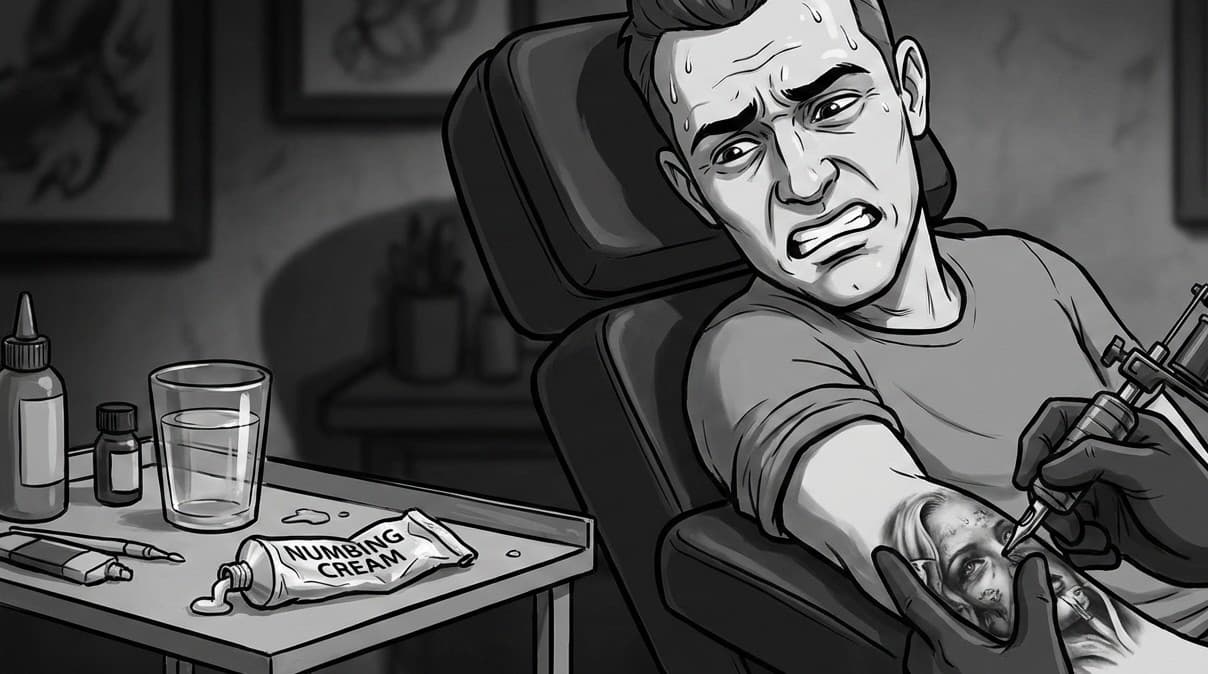
Thinking of using numbing cream for your next session? Read this first. It might seem like a quick fix, but for long realism sittings, it often causes more problems than it solves.
Let’s talk about the elephant in the room: numbing cream. I get asked about it constantly. Can I use it? Will it ruin the tattoo? Is it cheating?
Here is my honest stance. I do not supply it. I do not apply it. And generally, I do not recommend it.
If you are absolutely dead set on using it, I won’t stop you—but you need to know exactly what you are signing up for. It isn’t the magic wand people think it is, especially for the kind of high-detail realism work I do here in Sheffield.
The biggest issue with numbing cream is the duration. Even the best stuff only lasts a couple of hours at most.
Here is the kicker: the first few hours of a session are usually the easiest anyway. That is when your adrenaline is high and you are fresh. By using cream, you are numbing the easy part.
When you get tattooed naturally, your body releases endorphins. The pain builds up gradually, and your brain adjusts to manage it. You find a rhythm.
When you use numbing cream, you bypass that natural acclimation. You feel nothing for two hours, and then—bang. The cream wears off, and the pain hits you like a train. It’s 0 to 100 in seconds.
I have tattooed the same clients with and without cream. Without fail, the ones who use cream suffer more when it wears off. In fact, of the 5–10% of people who actually "tap out" and can't finish a session, most of them used numbing cream. It stops working, the shock hits, and they can't handle the sudden shift.
Realism requires perfect skin texture. Numbing creams change that texture.
I have seen skin turn rubbery, bright red, or even look almost blistered after the wrap comes off. If you turn up and your skin looks burnt or unworkable:
It is a gamble that can cost you a lot of money and a wasted day.
There are plenty of horror stories in the industry about tattoos healing poorly or looking faded because the cream affected the ink absorption. While I haven't personally seen a disaster, the risk is there.
Because of this variable, my standard policy on free touch-ups changes: If you use numbing cream and the tattoo heals faded or patchy, your touch-up is NOT free. You will need to pay for the session to fix it.
I have no issue with you doing what you need to do to get through a session, but don't say I didn't warn you. If you want the best possible result for your black and grey realism piece, my advice is simple: eat a good breakfast, get a good night's sleep, and trust your body to handle the process naturally.
Still got questions about preparing for your session? Check out my FAQs or drop me a message.